
David was 14 years old. He lived in government housing. Every day on his way to school, he walked past people trying to sell him drugs. He didn't have money for much of anything, let alone a hobby. He had been told, in more ways than one, that he was never getting out.
Then someone handed him a skateboard.
The Alex Fund gave David a scholarship to skate for free at a park in Nashville — a park named for a 13-year-old boy who never got the chance to grow up. In exchange, David had to keep his grades up. Not straight A's. Just passing. The program met him where he was.
He stayed in the program through his entire high school career. The skate park became his safe place — the one destination he walked toward every day instead of away from. Another family in the program noticed him, got to know him, and eventually adopted him. He got out of government housing. He graduated. He enlisted in the United States Army.
Today, David is in his 30s, serving his country, building a life that every voice in his childhood told him was impossible.
That's what the Alex Fund does. And that's why The Kash Foundation backs it.
The Mission
The Alex LeVasseur Memorial Fund exists to support overlooked and at-risk youth through passionate activity and strong role models.
That's the mission statement. But what it means in practice is simpler and more radical than it sounds: find the kids who have fallen outside the lines — the ones who aren't in traditional sports, who aren't thriving in conventional programs, who are slipping through every crack the system has — and meet them in the thing that lights them up.
For some, that's skateboarding. For others, it's music. For many, it's simply having an adult who shows up consistently and says: I see you. You matter. Let's go.
The Fund operates under the Community Foundation of Middle Tennessee, a structure that allows the family to maintain full control over programming and grants while offloading the administrative overhead of running an independent 501(c)(3). It's a deliberate choice — one that lets a small, hands-on organization punch far above its weight.
And hands-on is an understatement. Casey LeVasseur yrjdoesn't just approve grants and walk away. She teaches weekly music lessons alongside the students. She helps build out programming at the YMCA. She personally oversees the skate park operations, the partnerships, the events. Her brother Alex's name is on every initiative the Fund touches — and she treats that responsibility like a sacred trust.
"It's my brother's legacy. His name is on these things. It's really important for me to know what that experience is like for the people participating."
The philosophy behind the Fund's approach is deceptively simple but rarely practiced at this level of commitment: if you find somebody that's lit up about something, they're going to have a lot more motivation for the other parts of their lives. That's why the Alex Fund doesn't lead with grade requirements or behavior contracts. It leads with a skateboard. A guitar. A Monday night jam session. It finds the spark first — and builds everything else around it.
The Fund has three anchor partnerships that form the backbone of its work: the Brentwood Family YMCA, the Skate Park Project (formerly the Tony Hawk Foundation), and Beat of Life, a music-based nonprofit. Rather than trying to replicate what these organizations already do well, the Alex Fund partners with them — co-creating programs, sharing resources, and extending its reach far beyond what a small family-led fund could accomplish alone. It's a model built on the conviction that the nuts and bolts are already out there; what takes funding is the replication, the expansion, and the sustained presence in communities that too often get a grant and a goodbye.
Together, these partnerships give the Alex Fund reach into skate parks, music labs, schools, and communities across Middle Tennessee — and increasingly, across the country.
A Brother's Legacy
Alex LeVasseur, Casey’s brother and the son of Nashville’s Hall of Fame songwriter Jeffrey Steele, was 13 years old when he passed away in 2007. He was a skateboarder. He loved music. He was the kind of kid who lit up when he found something he was passionate about — and his family watched that light change him.
When Alex died, his family started the Fund almost immediately — not with a grand strategic plan, but with a conviction: they wanted to do something in his name, and they wanted it to reflect the things he loved.
Skateboarding came first. Alex had learned to skate at the Brentwood Family YMCA, at a wooden skate park that would later be destroyed in Nashville's devastating 2010 flood. When the family saw the wreckage, they didn't hesitate. They partnered with the YMCA to rebuild the park in Alex's name.
That first rebuild was modest — a wooden park, expanded and improved, but still fundamentally familiar. Then, a few years ago, the YMCA undertook a massive renovation of the entire Brentwood center. The old skate park location was no longer viable. But what could have been a loss became an opportunity.
The Alex Fund helped design and fund a brand-new concrete skate park — larger, more durable, positioned directly adjacent to the Y's new teen center. It reopened in August 2024. And as of this spring, it has lights for the first time, opening up evening programming, late-night skate events, and after-hours community gatherings that were never possible before.
"The skate park is just so beloved by everybody using it. It's pretty amazing to see."
But the Alex Fund's footprint extends far beyond one park in Brentwood. Through its partnership with the Skate Park Project, the Fund has supported the construction of 14 skate parks in underserved communities across the country. It has also funded the organization's Supply the Ride program, which provides skate gear — boards, helmets, pads — to kids in communities where a $150 setup is an impossible expense.
Alex never got to see any of it. But his name is on skate parks from Tennessee to communities he never visited, and every one of them exists because a 13-year-old boy loved skateboarding — and a family refused to let that love die with him.
Skate Parks, Music Labs, and Monday Night Jams
The Alex Fund's programming has expanded well beyond skateboarding — though skateboarding remains at the heart of everything.
The original program model was a skateboard scholarship at a Nashville park called the Sixth Avenue skate park, operated by a nonprofit called Rocket Town. The Fund sponsored about 14 middle- and high-school-aged kids at a time, paying for their access to a park they otherwise couldn't afford. In exchange, the kids agreed to maintain certain grade goals — realistic, individualized benchmarks that met them exactly where they were.

The program wasn't about turning skaters into honor students overnight. It was about giving them something they cared about — and tying it to the kind of accountability that builds momentum. If you're failing every class, we just want to see you pass every class. The bar wasn't perfection. The bar was forward motion.
That model worked. Kids stayed in the program for years. They called themselves "the Alex skate team." And for kids like David, the program became the anchor that held everything else in place.
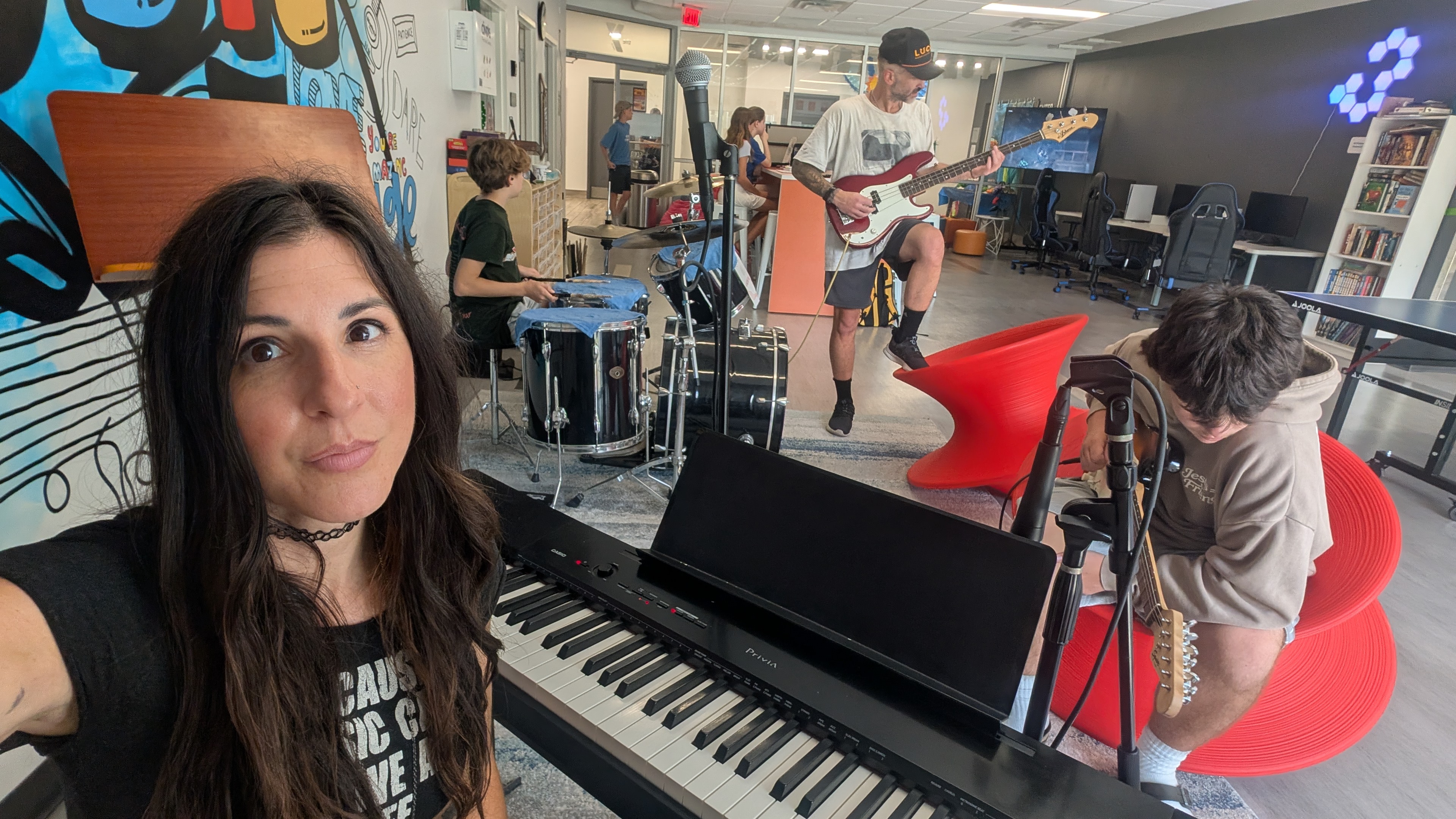
In recent years, the Fund has expanded into music — another one of Alex's passions. Inside the Brentwood YMCA's new teen center, the Alex Fund built a full music production lab: acoustic and electric guitars, bass, a PA system, a full drum kit, and a production studio. The space is open to any teen at the Y, but the Fund also programs it weekly in partnership with Beat of Life.
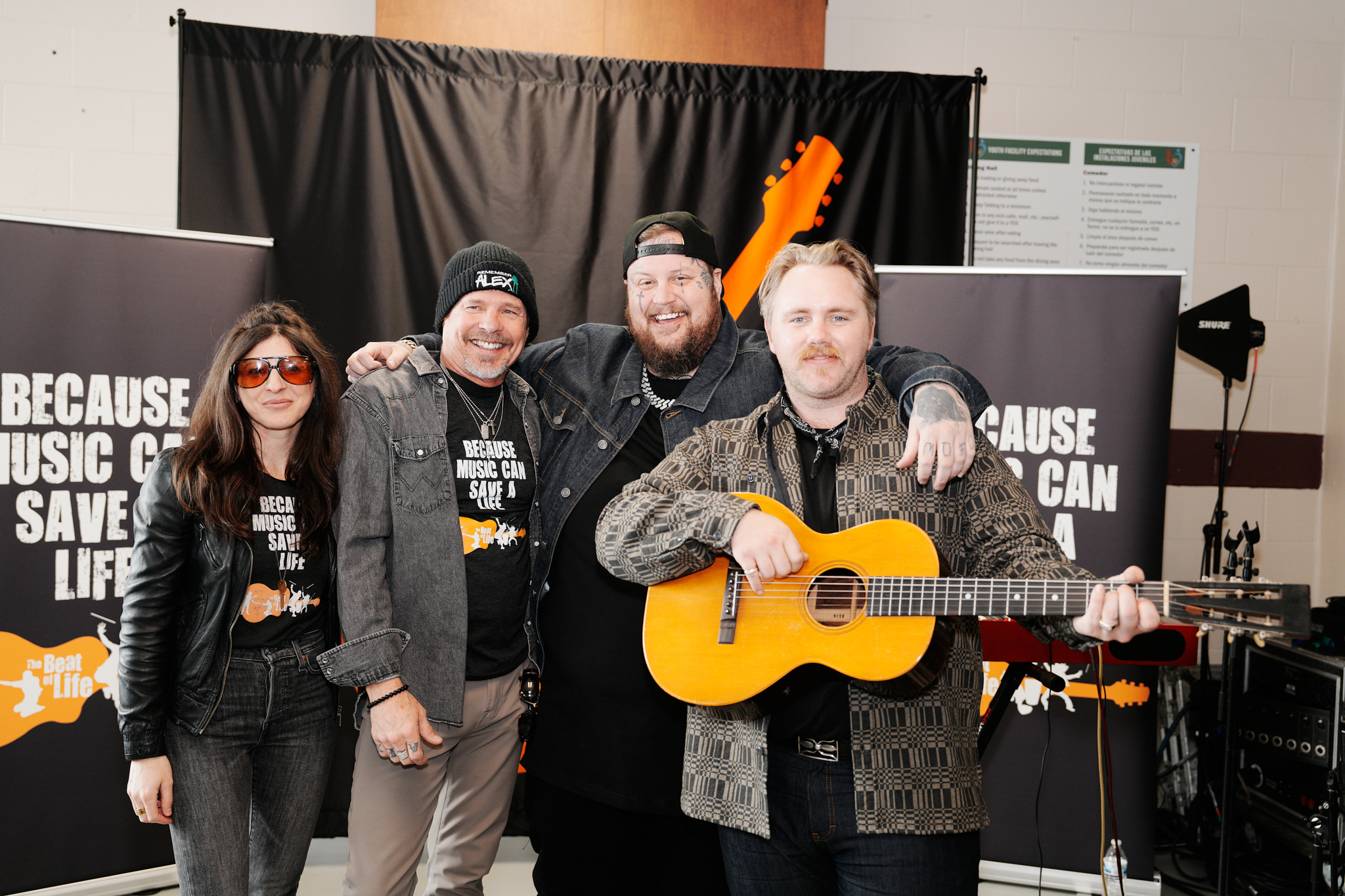
Every Monday night, the Alex Fund hosts music lessons at the Y — a combination of instruction and open jam session where kids can learn guitar, play in a band setting, and work with professional musicians. Casey herself is one of the teachers. The program takes beginners and advanced players alike, and it's built around a philosophy of collaborative learning: teaching kids not just how to play an instrument, but how to play with other people.
"What we've really been building this program into on Monday nights is teaching them how to be a band and how to play with other musicians — how to anticipate what someone's going to do, how to play at the right volume."
The results have been tangible. Two of the most consistent Monday night students were invited to perform at the Alex Fund's annual benefit concert this year — sharing a stage with artists like Billy Ray Cyrus, Jeffrey Steele and Uncle Kracker. A drummer and a guitar player, both teenagers, playing in front of a packed 300-seat theater because they showed up every week and earned it.
And then there's Sam — a kid Casey and her partner Curtis started teaching on Zoom during COVID. Sam had never held a guitar before. He had health challenges that limited his mobility, and his father thought music might help with coordination and give him something to hold onto during lockdown. Casey spent 30 minutes each week on writing; Curtis spent 30 minutes on guitar. All online, at first. Then in person, once the world reopened.
Sam kept at it through high school. He's now in his first year of college — minoring in music.
His parents told Casey it was because of those lessons.
Real Impact
The Alex Fund is not a large organization. It doesn't raise hundreds of millions of dollars. It doesn't have a national staff or a corporate board. It operates behind the scenes, in a community, with a family at the center of every decision.
And that's exactly what makes it work.
In 19 years of operation, the Fund has supported 14 skate parks in underserved communities across the country. It has funded skate gear for kids who couldn't afford a board. It has built a concrete skate park and a music production lab at the Brentwood Family YMCA. It runs weekly music programming and annual benefit concerts that give young musicians a stage. It has partnered with three anchor organizations — the YMCA, the Skate Park Project, and Beat of Life — to extend its reach far beyond what a small fund could accomplish alone.
But the real impact isn't in the infrastructure. It's in the stories.
David, the kid from government housing who was adopted through the skate scholarship program and now serves in the United States Army. Sam, who picked up a guitar on Zoom during COVID and is now studying music in college. The Monday night band kids who played alongside professional musicians at a sold-out benefit concert. The skaters who finally had somewhere safe to go after school — and someone who noticed whether they showed up.
"If you find somebody that's lit up about something, they're going to have a lot more motivation for the other parts of their lives."
That insight — that passion is the gateway to accountability — is the engine that drives everything the Alex Fund does. It's why the programs don't start with grades or behavior plans. They start with a skateboard. A guitar. A Monday night jam session. They start with the thing the kid already cares about — and build outward from there.
Casey puts it plainly: teens are one of the most important and most neglected age groups. The systems that exist for them are often punitive, transactional, or simply absent. What the Alex Fund offers is different. It's relational. It's consistent. And it treats young people not as problems to be solved, but as people to be invested in.
The annual benefit concert is perhaps the most visible expression of that philosophy. Held at a 300-seat theater in Franklin, Tennessee, the event is deliberately intimate. There's no live stream. If you're there, you're there. The caliber of talent that crosses the stage — artists who normally fill arenas — makes the experience something attendees don't forget. But the most powerful moments aren't the headliners. They're the student musicians who earned their way onto that stage through months of consistent Monday night effort, standing in front of a packed house and playing alongside professionals because someone believed they belonged there.
That concert is not a fundraiser dressed up as entertainment. It's a demonstration of what the Fund builds: a pipeline from a kid picking up a guitar for the first time to a young musician performing for a real audience. From a 14-year-old walking past drug dealers to get to the skate park to a soldier serving his country. From grief to legacy to opportunity — repeated, year after year, kid after kid.
The ripple effects of that philosophy show up in ways that can't be reduced to metrics. A kid who was told he'd never leave government housing is now defending his country. A kid who couldn't hold a guitar is now studying music. A skateboarder who was in the program a decade ago came back to teach Casey's daughter her first tricks — a full-circle moment that captures everything the Fund is about.
"It's kind of like that cool full circle — still getting to have someone be such an active part of your life that you got to be a part of theirs."
Why The Kash Foundation Stepped In
The Kash Foundation's mission is simple: Back the Brave. Build the Future.
The Alex LeVasseur Memorial Fund is both of those things in action.
It takes bravery to build something from grief — to channel the loss of a 13-year-old brother into nearly two decades of sustained, hands-on community work. It takes bravery to stay small when the world rewards scale, to remain rooted in a community when the pressure is always to expand, and to keep showing up every Monday night to teach music to teenagers when nobody is watching.
And the future the Alex Fund is building is exactly the kind The Kash Foundation exists to support. These are programs that reach young people the traditional systems have missed — kids who aren't in organized sports, who don't fit neatly into after-school programming, who need someone to find them in the thing they already love and say: this matters, and so do you.
The Foundation's grant to the Alex Fund supports the operational infrastructure that keeps these programs running — the music equipment, the skate gear, the weekly programming, the events and concerts that give young people a stage they've earned. Without that kind of support, the Monday night jam sessions don't happen. The benefit concert doesn't feature student musicians alongside professional artists. The skate park doesn't get lights. The next David doesn't find his way to a board.
The Kash Foundation doesn't just fund large-scale initiatives. It funds the organizations doing the hardest, most personal, most sustained work in communities — the ones where a family's grief became a generation's opportunity.
The Alex Fund is proof that you don't need a massive budget to change a life. You need a skateboard, a guitar, a Monday night, and someone who refuses to walk away.
Mission First isn't just a tagline. It's the standard we hold ourselves to. The Alex Fund met it. The Foundation showed up.
Casey doesn't run the Alex Fund because it's her job. She runs it because her brother Alex loved skateboarding, loved music, loved being alive — and she made a decision, nearly twenty years ago, that his passions would outlive him.
They have. In 14 skate parks. In a concrete park with new lights at the Brentwood YMCA. In a music lab where teenagers learn to play in a band for the first time. In a Monday night tradition that turns strangers into musicians and musicians into mentors. In a young soldier named David who traces the beginning of everything back to a free skateboard scholarship and a family that noticed him.
The Kash Foundation believes that America's heroes aren't only on the battlefield. They're in the communities where people show up every week, year after year, because they believe the next generation is worth fighting for.
Casey and the Alex Fund are doing that work. We stand with them.
The mission doesn't stop. Neither do we.
